
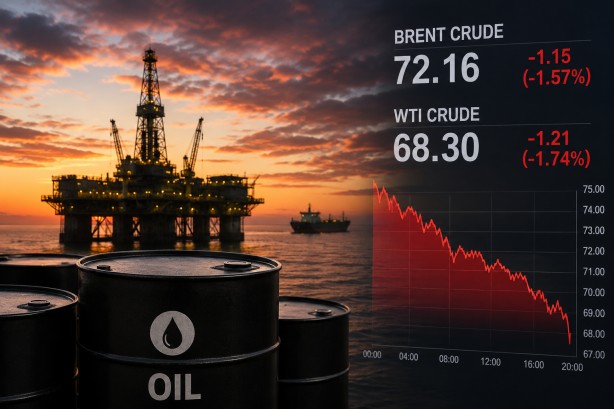
On Thursday, oil prices saw a modest decline as investors capitalized on recent gains and evaluated the implications of rising tensions between the United States and Iran. Brent crude dipped by 0.52%, reaching $84.51 per barrel, while US West Texas Intermediate crude decreased by 0.29%, settling at $79.37 per barrel. Despite these drops, both benchmarks stayed near their highest levels in a month after initially building on their upward trajectory.
Investor sentiment has been largely shaped by fears of potential disruptions to oil supply, prompted by renewed US military actions targeting Iranian military facilities and subsequent threats from Tehran to limit energy exports in the region. The strategic Strait of Hormuz, a pivotal corridor for global oil and liquefied natural gas shipments, remains under close scrutiny from traders. Reports indicate that shipping activity through this vital passage has diminished following the latest surge in hostilities.
Analysts have pointed out that the ongoing geopolitical friction is contributing to elevated oil prices, though they are watching closely to see if the conflict will lead to significant disruptions in energy supply. Interest is also focused on the Bab el-Mandeb Strait, another crucial path for energy transit, amid concerns that regional allies might get drawn into the unfolding conflict.
There is a growing apprehension among some analysts that if tensions were to escalate further, oil prices could rise even more, particularly if export disruptions persist. Conversely, a reduction in hostilities could pave the way for a decrease in oil prices as the year progresses.