
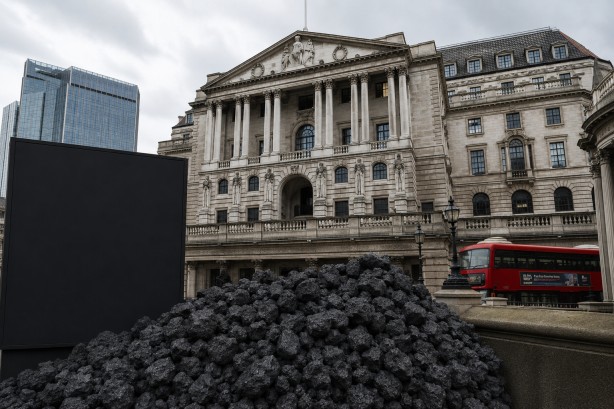
In a decisive move to tackle climate-related financial risks, the Bank of England has revealed that it will cease accepting bonds associated with thermal coal companies as collateral in its lending operations starting October. This decision highlights the central bank’s commitment to mitigating the financial impacts of climate change.
Commercial banks frequently utilize bonds as collateral when borrowing from the central bank, a practice that facilitates their routine operations and transaction settlements. However, under this new directive, bonds tied to thermal coal—a commonly used fossil fuel in power generation—will no longer qualify for such purposes.
The Bank of England has articulated that firms involved in the thermal coal sector are increasingly vulnerable to financial risks as the global push for cleaner energy and net-zero emissions gains momentum. This shift could lead to the devaluation of coal-related assets over time. To safeguard its balance sheet, the central bank also retains the option to apply discounts to bonds from other sectors perceived as exposed to climate risks.
Environmental advocates have praised this policy change, suggesting it sends a powerful message to the financial markets and might incentivize commercial banks to cut down their investments in high-pollution industries. Already, over 150 prominent financial institutions globally have implemented restrictions on transactions related to the thermal coal industry.
Experts emphasize that the success of this policy will rely heavily on how effectively climate risks are measured and whether similar strategies are extended to other environmentally detrimental activities in the future. This move by the Bank of England is seen as a crucial step in aligning financial practices with global environmental goals.