
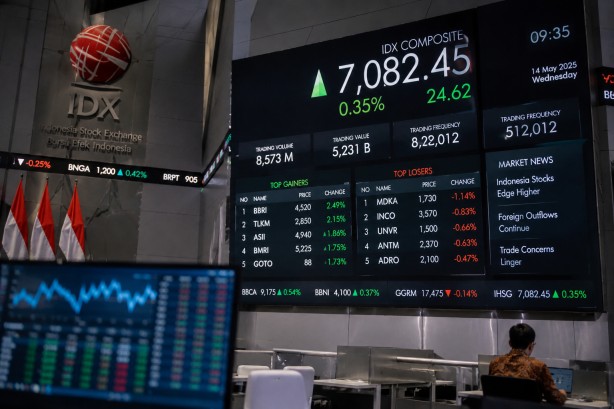
During the week ending on July 24, Indonesia’s main stock market indicator, the Jakarta Composite Index (JCI), experienced a 0.34% increase. This growth was buoyed by intensified trading activity, despite the backdrop of persisting foreign investor withdrawals and the overarching uncertainty in the global economy. The market capitalization of the Indonesia Stock Exchange expanded to Rp 10,870 trillion, while the average daily trading turnover saw a significant rise of 41%, reaching Rp 19.76 trillion.
Despite these gains, foreign investors continued to pull funds from the market, resulting in net outflows totaling Rp 79.09 trillion for the year to date. This ongoing trend underscores a cautious attitude among international investors regarding Indonesian financial assets. The hesitancy is largely attributed to external pressures, including geopolitical tensions and economic policies affecting global trade.
One of the primary factors impacting market sentiment was the escalation in global oil prices, which followed heightened tensions in the Middle East. This development, along with the introduction of new US tariffs on imports from various trading partners, has contributed to the market’s cautious outlook. Notably, a 10% tariff was imposed on certain goods imported from Indonesia, adding to the economic challenges facing the country.
In response to the rising oil prices, Indonesia’s Finance Ministry has acknowledged the potential for increased pressure on the nation’s 2026 state budget. However, the ministry maintains that the country’s fiscal position remains generally stable, suggesting resilience in the face of these external pressures. Despite the challenges, Indonesia’s financial markets are navigating the complexities of the global economic landscape with a focus on maintaining stability.